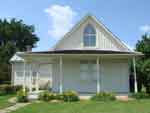
Thursday, April 18, 2013

Eldon Public Library turns 100

This Saturday, April 20, the Eldon Public Library turns the century mark and it will not go unnoticed by library staff and the city of Eldon.

On Nov. 23, 1912 the cornerstone was laid for the present-day library and on May 9, 1913 a formal dedication was held at the Christian Church to christen the new building and usher in an era of public institutions dedicated to knowledge and learning.

In this day we have a tendency to take the local library for granted, as most have been an institution for well over 100 years. But in the waning years of the 19th century and the early days of the 20th this was not the case, as public libraries were considered an indulgence of sorts the country as a whole had not yet wholly endorsed. But thanks, in part to Andrew Carnegie, libraries were moving from a luxury to necessity.

The legacy of Andrew Carnegie is etched in the public’s mind as the person who decided to use his wealth to benefit the masses. And to do this, he decided to build libraries in towns small and large across the country. Public libraries, free to the citizens of all ranks and social orders, to provide learning opportunities theretofore not readily available.

Nationwide Carnegie contributed funds to build 1,419 libraries for a total cost of $41.5 million. Iowa was an early recipient of the funds with Fairfield receiving the first grant in the state in 1892. This was remarkable as Fairfield was the first town west of Pittsburgh, Penn. to receive such a grant. There were many more to follow.

A total of 101 libraries were built in Iowa using Carnegie funds. Although Iowa wasn’t the leading builder of Carnegie libraries (it ranked sixth nationwide in the total built) it may not have been that high if it wasn’t for the progressive reputation Iowa is known for.

According to the Carnegie Libraries in Iowa Project based at the University of Iowa, at that time Iowa had become the 10th state to pass legislation allowing towns to establish and maintain libraries through taxation, a vital measure providing a means to create and sustain libraries.

Another progressive piece of legislation that, according to the project was instrumental in establishing libraries on Iowa, was allowing women to vote on “yes” or “no” issues in 1894—26 years before the 19th Amendment allowed voting rights to all women. This vote was critical in Iowa as women’s organizations often led the movement to establish a library.

To digress. A woman voting is something else we take for granted in society, but in the first 100-plus years of our country it was a revolutionary thought. Somewhat ironic considering all Americans at one time were considered revolutionaries.

Casual research did not reveal if a women’s organization was instrumental in establishing a library in Eldon but, given the evidence that women were prime movers in founding libraries, one can rest assured there were women on the front lines of the movement.

Eldon opened its first library in 1906 and in 1911 the local library association (established in 1908) appealed to Carnegie for funds to help construct a building. In turn he donated $7,500 to the effort and two years later Eldon had the building that has stood for 100 years and has served countless citizens.

 To honor this milestone the Eldon Public Library will hold an open house this Saturday from 9 a.m. to 2 p.m. There will be refreshments available and craft building for the younger patrons is scheduled from 9:30 to 11:30 a.m. At 1 p.m. Dr. Shana Stuart, director of the Carnegie Libraries in Iowa Project at U of I, will make a presentation to mark the occasion.

In the words of T.S. Elliot, “The very existence of libraries affords the best evidence that we may yet have hope for the future of man.” So stop by the library this Saturday and not only wish it a Happy Birthday but celebrate the future of our country. And maybe check out a book.
Brian Chambers
Media Coordinator
American Gothic House Center
641-652-3352
wapellocountymediacoordinator@gmail.com

The American Gothic House Center strives to become financially independent through gift shop revenue, sponsorships, and by establishing an endowment fund. Funds raised in this campaign will be used to match the Iowa Cultural Trust Endowment Challenge Grant and will become endowment funds to support the Center's annual operations. As a subscriber to the weekly newsletter, you have already shown support for the American Gothic House Center. I invite you to strengthen your role in the valuable experience we provide the community by making a contribution to our fund drive. Click here to give your tax deductible gift, or head to our website for more information. Thank you to all who have donated so far!
Our Mission: Integratin
300 American Gothic St | Eldon, IA 52554 | 641-652-3352 | theamericangothichouse@gmail.com

Wednesday, April 10, 2013

Where the tall corn grows

“Wood was painting what he longed for, an agrarian paradise where the land took care of her own before the machine came to torment her; further, this was an America without urban centers and thus free of the social complexities of mass unemployment, crowded conditions, factories and industry.”

    -  Going Back to Iowa: The World of Grant Wood
        University of Virginia American Studies Program

Sounds like paradise, doesn’t it? Many would agree; others not so much. A world without malls, convenience stores or McDonald’s? How would we survive? But there was a time when it was quite possible to survive, in fact thrive, without the amenities (and aggravations, I might add) that we have today.

It is obvious when viewing the works of Grant Wood that he lived in a dream world, a world where machinery wasn’t invented yet, smokestacks didn’t line the horizon and societal ills common today were nowhere to be found, and he painted this world in his landscapes.

This Sunday, an opportunity exists to gain a closer look into Wood’s world as Laural Ronk, director of the Bluffs Arts Council, and Dick Miller, chairman of the Bluffs Arts Council Corn Room Restoration Committee, will give a presentation at the Eldon Library Hall from 2 to 3 pm on the efforts to recover what is left of one of three Grant Wood murals.

To provide some history: In 1926 hotelier Eugene Eppley, commissioned Wood to paint four murals in dining rooms of his hotels in Sioux City, Waterloo, Cedar Rapids and Council Bluffs.

“Three of the murals were `corn murals' (one in each hotel). They were painted to fill the room. The corn murals were supposed to make viewers feel as if they were sitting in an Iowa field with tall stalks of corn, rolling hills and barns dotting the horizon. The mural is a typical example of the kinds of landscape visible in the surrounding countryside.”    - Art Talk

Two of the Corn Murals were in the Sioux City and Cedar Rapids hotels and are preserved in their entirety and on display in Sioux City Art Center and the Cedar Rapids Museum of Art. The third, the mural in Council Bluffs at the Hotel Chieftain, wasn’t as lucky.

In 1970 when the hotel was in the process of being converted into apartments the new owners, upon being told the murals were unsalvageable, allowed anyone to come and take down the murals under the condition they were not sold and the pieces would be restored. Later research revealed segments of the mural were taken down and—for the most part—kept safe and, in some cases, restored.

One might ask why the mural segments, after all these years, are important as there are two other complete murals elsewhere in the state. An answer can be found in an entry concerning the murals from the Traditional Fine Arts Association.

“Grant Wood's Corn Room Mural is historically important because it shows that Wood was developing the ideas and approaches that would become Regionalism several years before he produced his first clearly-Regionalist works and achieved critical success with his invention: Woman with Plants (1929) and American Gothic (1930)... Wood's concerns with landscape, visible in the Corn Room Mural, remain a constant reference point for his Regionalist works: it appears as the background to Woman with Plants and in the famous house seen behind the couple in American Gothic.”

To preserve this history, in 2008 the Bluffs Arts Council began a campaign to raise funds to obtain the remaining pieces of Wood’s Corn Room Mural painted for the Hotel Chieftain and restore them for viewing. Thus far, 27 segments of the mural have been identified and the Bluffs Arts Council has obtained 11 of them, with several displayed in the lobby of the Pottawattamie Courthouse in Council Bluffs.

So this Sunday afternoon, for one hour, make a point to stop by the Library Hall and hear what Ronk and Miller have to say. After all, they are devoting their time and energy to preserve a piece of Grant Wood for future generations. Something that is very dear to anyone associated with the American Gothic House Center.

The presentation is sponsored by the American Gothic House Center and the Ottumwa Area Arts Council. Hope to see you Sunday.

Brian Chambers
Media Coordinator
American Gothic House Center
641-652-3352
wapellocountymediacoordinator@gmail.com

The American Gothic House Center strives to become financially independent through gift shop revenue, sponsorships, and by establishing an endowment fund. Funds raised in this campaign will be used to match the Iowa Cultural Trust Endowment Challenge Grant and will become endowment funds to support the Center's annual operations. As a subscriber to the weekly newsletter, you have already shown support for the American Gothic House Center. I invite you to strengthen your role in the valuable experience we provide the community by making a contribution to our fund drive. Click here to give your tax deductible gift, or head to our website for more information. Thank you to all who have donated so far!
        Our Mission: Integrating the puzzle pieces of American Gothic
300 American Gothic St | Eldon, IA 52554 | 641-652-3352 | theamericangothichouse@gmail.com

Thursday, April 4, 2013

Egg Roll inside, but a success

American Gothic House Center

Rain did not deter the planned Easter activities last Friday, as over 175 children took part in the first annual Easter Egg Roll at “our White House.”

Originally planned for the lawn at the American Gothic House Center, steady rainfall forced the activities inside to the Eldon Library Hall, adjacent to the library on the main thoroughfare in town. Although a bit cramped, the kids didn’t seem to mind, as each moved from station to station, all manned by G.A.T.E volunteers and local townspeople.

Donna Jeffries was in charge at the Easter Egg Roll station where lanes were marked with tape on the floor. Each child was issued a large wooden spoon and a hard-boiled egg was placed in the lane in front of them. On the command of “go” the contestants guided the egg—using only the spoon for propulsion and steering—to the finish line where all received a bag of candy. Besides candy, every bag contained an American Gothic House bookmark and pencil.

At the “bunny ear” table Nancy Teubel, Martha Bedford and plenty of parents, helped the children glue and paste ears together. It was a three-step process, with the first step fitting the band to the child’s head. The second step was to glue the parts of the ears together, then lastly staple the ears to the headband. As the afternoon passed the library hall was a sea of bunny ears perched precariously on each child’s head.

Pris Coffman, along with some help, guided the children through making a Peek-A-Boo Chick. This was a rather elaborate creation resulting in a hinged paper egg that, when tilted to one side, revealed a baby chick.

Rumors had it there were Secret Service agents at the hall (the only people in attendance wearing black suits and sunglasses and talking into their lapels) on a special mission from the White House to monitor the Egg Roll and other activities. It is unconfirmed but word has it the Secret Service were so impressed with the Peek-A-Boo Chick creations that arrangements were made to have the same activity on the following Monday at the White House.

No Easter activity would be complete without the Easter Bunny and, sure enough one was one hand. Originally the plan was to have children pose with the Easter Bunny in front of the American Gothic House, but since this wasn’t possible a facsimile of the house was used a backdrop for the photos. Margie Stansberry assisted in taking pictures and everyone received a 4x6 memory of the day. Paige Evans played the role of the Easter Bunny and did it so well perhaps a career in acting is in her future.

At yet another station Cindy Shephard stepped away from her day job as elementary principal and curriculum director at the Cardinal Schools and read to all who gathered around. There was no report back from the children as to how well their principal did, but if asked, I am sure each would have glowing praise. After all, she is the principal.

All total 10 volunteers stepped in to lend a hand at the event, not including those who helped in the pre-party logistics, such as bagging 125 sacks of candy, making 75 commemorative eggs and setting up the hall. From this observer’s vantage point—and the Secret Service agents—G.A.T.E and the staff from the American Gothic House Center can consider the inaugural Egg Roll a success.


Brian Chambers
Media Coordinator
American Gothic House Center
641-652-3352
wapellocountymediacoordinator@gmail.com

The American Gothic House Center strives to become financially independent through gift shop revenue, sponsorships, and by establishing an endowment fund. Funds raised in this campaign will be used to match the Iowa Cultural Trust Endowment Challenge Grant and will become endowment funds to support the Center's annual operations. As a subscriber to the weekly newsletter, you have already shown support for the American Gothic House Center. I invite you to strengthen your role in the valuable experience we provide the community by making a contribution to our fund drive. Click here to give your tax deductible gift, or head to our website for more information. Thank you to all who have donated so far!
        Our Mission: Integrating the puzzle pieces of American Gothic
300 American Gothic St | Eldon, IA 52554 | 641-652-3352 | theamericangothichouse@gmail.com

Thursday, March 28, 2013

Shades of tan soon to be replaced—we hope

American Gothic House Center
It appears that spring might well be here. The temperature has become tolerable, there is an absence of chill in the air and the birds have been singing of a morning. It’s about time, after all April is across the street.

Although slow in coming, I prefer a spring such as the one we’ve had. I like to back into the season, having it approach gradually as opposed to a winter coat one day and shorts the next. Last year was a prime example of this and what can happen if spring comes too quickly and early.

As you may recall, last March ushered in 80-plus degree days causing flowers to bloom early, farmers to plant crops weeks before normal and, worst of all, required homeowners such as myself to mow the grass. As far as I am concerned there should be a Congressional mandate prohibiting lawn mowing before April.

Then we all know what happened after the early spring—heat and lots of it. In fact the ensuing summer was one of the hottest on record. The only good that came out of it was the lawn mower went in storage for July, August and most of September. To borrow from a cliché, every cloud does have its silver lining.

Although I favor spring to approach slowly, this year I am particularly looking forward to it as the Center needs color. Over the winter I have been struck with the beauty of the American Gothic House and the adjacent Center covered with a blanket of snow with all color absent. Snow somehow transforms these two buildings into safe, peaceful, and warm places that project an image fit for canvas. However, between snows all that can be observed are shades of tan.

Tan works well in the warm months when it is offset by green grass, vibrant hues from the wildflowers and heavy green leaves on the trees. But after the leaves fall and the wildflowers go dormant all that remain are shades of tan. The buildings are a light tan, the mulch in the wildflower garden is a darker shade of tan, the rocks that surround the Center are varying shades of tan and the grass—also dormant—is yet another shade of tan. Unless you are a fan of khaki clothing this is a lot of tan.

Speaking of khaki, my first dress uniform in the Army was the summer khakis. It remained my favorite uniform long after it was taken out of service in the mid-1980s. What made it appealing wasn’t the khaki coloring itself, it was the way the color of the accompanying accoutrements—medals, the crisp yellow stripes of rank outlined with green, the service medals pinned over the left pocket and the black name tape over the right virtually gleamed against the neutral hue of the uniform. It looked sharp. It reminds me of the house and Center in spring, summer and fall.

In the cold months the buildings are tall soldiers outfitted with crisp, starched uniforms ready for inspection. But as any soldier that has stood an inspection knows, the uniform—sans accoutrements—is like a painting, the blank canvas of which the artist applies the color to make the whole. In the soldier’s case the color is the stripes earned, the ribbons awarded, the unit patch, the shiny black name tag. Once these are applied the uniform—and the soldier—becomes whole.

Such as it is here at the American Gothic House Center, the buildings are the blank canvas. The color is the trees, flowers and visitors with their summer clothing posing in front of the house for a photo in their own period uniforms. It makes the place complete and brings a smile to the observer’s face. It’s a good place to be.

Remember, the first annul Easter Egg Roll at “our White House”—actually tan—will be held Saturday from 1 to 3 pm. In the form of eggs and children the grounds of the Center will come alive with much-needed color. It’s about time.


Brian Chambers
Media Coordinator
American Gothic House Center
641-652-3352
wapellocountymediacoordinator@gmail.com

The American Gothic House Center strives to become financially independent through gift shop revenue, sponsorships, and by establishing an endowment fund. Funds raised in this campaign will be used to match the Iowa Cultural Trust Endowment Challenge Grant and will become endowment funds to support the Center's annual operations. As a subscriber to the weekly newsletter, you have already shown support for the American Gothic House Center. I invite you to strengthen your role in the valuable experience we provide the community by making a contribution to our fund drive. Click here to give your tax deductible gift, or head to our website for more information. Thank you to all who have donated so far!
        Our Mission: Integrating the puzzle pieces of American Gothic
300 American Gothic St | Eldon, IA 52554 | 641-652-3352 | theamericangothichouse@gmail.com

Thursday, March 21, 2013

Egg Roll tradition extends to Eldon

As many know now, Gothic Area Tourism of Eldon and the American Gothic House Center are teaming up for the first-ever Easter Egg Roll here at the Center on Saturday, March 30. Much preparation has been done for the event and volunteers and staff are looking forward to it—and hoping for a bright, sunny day. However, it does call for some reflection. Why roll Easter Eggs?

Since Easter traditionally is a religious holiday, rolling the eggs signifies rolling the stone away from Christ’s tomb. I had no idea of this symbolism and I diligently sat through years of Sunday School classes. I must have missed that somewhere. So it goes with bunnies and eggs in the broader sense as both represent, if not religiosity, a rebirth that accompanies spring. A very brief synopsis concerning the traditional Easter symbols can be found at About.com. Check it out.

All that information aside, the Egg Roll at the Center is modeled after the traditional Egg Roll at the White House, the big one in Washington D.C. Ever wonder how that tradition got started?

Evidently, according to the White House Historical Association, the beginnings are a bit murky as initially, in the 1870s, it was an impromptu affair held on the grounds of the United States Capitol. New landscaping in 1876 prompted Congress to pass a bill prohibiting the activity and President Grant passed it into law in 1876. Needless to say this didn’t set well with area children and adults. That’s hard to believe, isn’t it? Congress passing a bill that annoys people. Good thing that doesn’t happen today.

In 1877—the first year the ban went into effect—rain cancelled all outdoor activities so it was moot. However, when egg rollers showed up in 1878 they were ejected by Capitol Hill police. Not to be deterred the children made a bee line for the White House in hopes the sitting president—Rutherford B. Hayes—would grant them access. He did and a tradition was born.

Subsequent presidents continued with the tradition with many putting their own spin on the Monday activity. Grover Cleveland invited the egg rollers, with their baskets of hard-boiled eggs, into the East Room for a reception. This turned out to be a bit messy as eggs fell from baskets and were ground into the carpeting thus ruining it. Cleveland wasn’t too upset, however, as when he returned to the White House later for another term he continued the tradition.

President Benjamin Harrison decided the affair needed some music and included the United States Marine Band, known as “The President’s Own,” directed by none other than John Philip Sousa, to perform.

As things go, the egg roll became quite an attraction and eventually measures were taken to limit the number of people on the South Lawn. A one grown child-one grown adults rule was instituted but this also didn’t go as expected and the rule was abused (imagine that). As it turned out kids would charge a fee to adults (unrelated to them) which would allow them through the gates and gain access to the South Lawn. The arrangement got so out of hand in 1939 Secret Service agents were stationed at the White House gates.

First Ladies have always been involved with the Easter Egg Roll, with many putting their own personal touch to it. In 1929, Lou Hoover introduced folk dancing. Pat Nixon introduced an Easter Egg hunt using real eggs, replacing the hard-boiled ones used in previous rolls and hunts. For obvious reasons this was a one-time only endeavor. Nixon also introduced the Easter Bunny to the event and he (or she) has become a fixture since.

First Lady Nixon was also the first to give something to each participant—a certificate of participation. By extension, Betty Ford and Rosalynn Carter handed out plastic eggs with personal notes inside. President Reagan and Nancy hosted an egg hunt with wooden eggs inscribed with signatures of notable people. Soon afterwards wooden eggs became the official souvenir of the Egg Roll with each inscribed with the signature of the President and the First Lady.

Since this year is the first year for the Easter Egg Roll at "our White House" there are not any traditions to uphold, rather it is time to make some. Be a part of tradition in the making by coming to the American Gothic House Center on Saturday, March 30 at 1 pm to roll eggs, receive a commemorative egg, play games, win prizes and see the Easter Bunny, just like at the real White House.

Brian Chambers
Media Coordinator
American Gothic House Center
641-652-3352
wapellocountymediacoordinator@gmail.com

The American Gothic House Center strives to become financially independent through gift shop revenue, sponsorships, and by establishing an endowment fund. Funds raised in this campaign will be used to match the Iowa Cultural Trust Endowment Challenge Grant and will become endowment funds to support the Center's annual operations. As a subscriber to the weekly newsletter, you have already shown support for the American Gothic House Center. I invite you to strengthen your role in the valuable experience we provide the community by making a contribution to our fund drive. Click here to give your tax deductible gift, or head to our website for more information. Thank you to all who have donated so far!
        Our Mission: Integrating the puzzle pieces of American Gothic
300 American Gothic St | Eldon, IA 52554 | 641-652-3352 | theamericangothichouse@gmail.com

Thursday, March 14, 2013

U of I revives art colony

Even a casual student of Grant Wood is familiar with the Stone City Art Colony project in the summers of 1932 and 33. It was Wood’s, along with Edward Rowan, dream to bring artists together to learn from established artists, compare notes and develop new works of art in the Regionalism style. The colony only lasted two years but its legacy has survived for decades. It still is considered a ground-breaking endeavor in the art world.

The University of Iowa School of Art and Art History is currently reviving Wood and Rowan’s dream with the creation of the Grant Wood Colony, a place where mid-career and emerging artists can work, live, teach and practice their art in an academic environment. It is becoming one of the most sought-after positions in the world of promising artists.

The idea for the art colony grew from Iowa City attorney Jim Hayes, who has lived in the house Grant Wood occupied from 1935 until his death seven years later. Hayes bought other properties in the neighborhood and approached the U of I about a neighborhood art colony in the area of Wood’s house, of which Hayes has decided to deed to the university upon his death.

One thing led to another and currently the colony consists of one house owned by the university and another house rented by U of I, both in close proximately to Wood’s Iowa City home, with the intention to expand as time progresses. Eventually Wood’s home will be the epicenter of the colony and reserved for visiting guests and meeting space. But that is down the road.

Saffron Henke, assistant director of the Grant Wood Colony, explained where the art colony currently stands.

“Currently we have two fellowships, one in painting and one in printmaking. There is hope there will be another fellow added next year,” she said.

Saffron explained these fellowships are “prestigious” in part due to the close association with Wood. But there are many others reasons the fellowships are in demand.  Each fellowship comes with furnished housing, a private studio, an opportunity to teach at the university, a salary and, of course, the distinction of being aligned with the University of Iowa School of Art and Art History. In the emerging art world, given the number of applications received, this is evidently a good deal.

“This year we will receive 225 applications for two positions,” Henke said. “Similar programs at other universities may have 50 applicants.” She added that applications for the Grant Wood Colony fellowships come from all over the United States and the world.

Besides the obvious perks the fellowships offer and the prestige associated with Grant Wood and the University of Iowa Art School, Henke said there is another reason the fellowships are sought, as in the art world there has been a renewed scholarly interest in Wood, due, in part, by the re-establishment of Regionalism and a Wood biography, “Grant Wood: A Life,” by R. Tripp Evans, that has garnered much attention.

Although Regionalism is embraced at the art colony, it shouldn’t be confused with artists attempting to recreate Grant Wood’s style, Henke said. Like Wood’s form of Regionalism it is an effort to take a closer look at the immediate world, only not defined the way Wood and other Regionalism artists defined it in the early 20th Century. “It is a return to finding what is going on closer to home,” she said.

Henke is not a life-long Wood scholar, as she only began studying Wood when she took the assistant director’s position at the colony two years ago. Since that time, however, she has “immersed” herself in Wood to gain clearer insight into the man and his art. She said working at the art colony “feels intently wonderful” and has hopes the colony grows according to plan.

Future plans include the colony having up to seven fellows in various disciplines to include performers, writers and humanists. The art colony area (all house in the neighborhood of Grant Wood’s home now occupied by Hayes) will expand to a total of four houses along with Wood’s home. And there will be sidewalks and gardens linking the houses together creating a place where artists learn from established artists, compare notes and develop new works of art in the Regionalism style.

Sounds a lot like Stone City.

For more information on the Grant Wood Art Colony or to donate to the project, contact Saffron Henke at saffron-henke@uiowa.edu.

Brian Chambers
Media Coordinator
American Gothic House Center
641-652-3352
wapellocountymediacoordinator@gmail.com

The American Gothic House Center strives to become financially independent through gift shop revenue, sponsorships, and by establishing an endowment fund. Funds raised in this campaign will be used to match the Iowa Cultural Trust Endowment Challenge Grant and will become endowment funds to support the Center's annual operations. As a subscriber to the weekly newsletter, you have already shown support for the American Gothic House Center. I invite you to strengthen your role in the valuable experience we provide the community by making a contribution to our fund drive. Click here to give your tax deductible gift, or head to our website for more information. Thank you to all who have donated so far!
        Our Mission: Integrating the puzzle pieces of American Gothic
300 American Gothic St | Eldon, IA 52554 | 641-652-3352 | theamericangothichouse@gmail.com

Thursday, March 7, 2013

A little bit of this and a lot of that

A few years ago I enrolled in a Latin class to satisfy my foreign language requirement for a Bachelors Degree. Out of the choices it appeared most logical believing I would probably forget everything else.

It was a demanding course having to deal with word gender (I didn’t realize some foreign languages assigned male or female to a word), declinations (I am not even going to go down that road) and putting the verb at the end of a sentence (?). I did, however, take away some interesting tidbits of information and some cool-sounding phrases.

One item I have used numerous times is the literal definition (roughly) of exit. It is a Latin word that means “he goes out.” Is that cool or what? In fact many of the words we use in the English language are derivatives of a Latin root.

It may be of some interest that our word “canine” comes from the Latin canis meaning “dog.” Our word “junior” is a direct reflection of the Latin junior which means “younger.” Fell asleep yet? Hold on here’s another one: ante is Latin meaning “before” and bellum is Latin for “war.” Ever here of those old mansions in the South referred to as “antebellum?’ This means they existed before the Civil War, and that concludes the lesson of the day (happy?).

But it does lead into one more Latin phrase I face on an almost daily basis: Tabula Rasa, which means roughly “blank slate.” Which is why you are getting this near-meaningless information, as it is one of those days my mind is a Tabula Rasa. Maybe it’s the time of year or the third moon of Saturn is aligned with the Dog Star, but I fail to posses an original thought as of this writing. When this is the case, I default to upcoming events at the American Gothic House Center—of which there are quite a few.

In a few weeks, on Saturday, March 30, the Center will host the first-ever Easter Egg Roll at "Our White House,” sponsored in conjunction with Gothic Area Tourism of Eldon. Just like the annual event at the “official” White House children will roll eggs across the lawn for candy and prizes. Volunteers will be on hand to help make bunny ears and take pictures in front of “our White House.” The Easter bunny will also make an appearance and every child will receive a special commemorative egg just like at the real White House.

A couple weeks later, on Sunday, April 14, at the Eldon Library Hall, Laural Ronk and Richard Miller of the Bluffs Art Council share the story of Grant Wood’s time in Council Bluffs and his painting of the Pioneer and Corn Room murals in Eugene Eppley’s Chieftan hotel in the late 1920s. The two will describe the importance of these murals and the Bluffs Art Councils efforts to collect and conserve remnants of the Corn Room to exhibit them in their community.

Then on Saturday, April 27, the Grant Wood Bus Trip will hit the road for Ames. This trip was described in detail in an earlier column and the deadline to sign up is April 12.

After that the Center takes a breather for awhile until the American Gothic Days in Eldon are held June 7-9, then it gets busy again.

Besides the festivities in Eldon (of which there are many), the American Gothic House Center is sponsoring a few of its own. On Saturday, June 8, the Center will hold a 5K Walk/Run and on Sunday, June 9, a 20-plus mile bike ride will originate from the Center. In addition, all weekend the Center will display entries for the American Gothic House Art Contest.

To find out more on all the events coming up clink on the underlined links above or go www.AmericanGothicHouse.net.

One more thing. 2012 was an eventful year for the American Gothic House Center as can been seen in the newly-published 2012 Annual Report. Click here to view the report.


Brian Chambers
Media Coordinator
American Gothic House Center
641-652-3352
wapellocountymediacoordinator@gmail.com

The American Gothic House Center strives to become financially independent through gift shop revenue, sponsorships, and by establishing an endowment fund. Funds raised in this campaign will be used to match the Iowa Cultural Trust Endowment Challenge Grant and will become endowment funds to support the Center's annual operations. As a subscriber to the weekly newsletter, you have already shown support for the American Gothic House Center. I invite you to strengthen your role in the valuable experience we provide the community by making a contribution to our fund drive. Click here to give your tax deductible gift, or head to our website for more information. Thank you to all who have donated so far!
        Our Mission: Integrating the puzzle pieces of American Gothic
300 American Gothic St | Eldon, IA 52554 | 641-652-3352 | theamericangothichouse@gmail.com

Thursday, February 28, 2013

No ordinary teacher(s)

Tucked away in a classroom at Eddyville-Blakesburg-Fremont High School in Eddyville, Iowa is an English teacher, John David Thompson. By day he dispenses typical English class fare: proper use of grammar and syntax, the formatting of an essay, the art of making smooth transitions between paragraphs, an introduction to the classics. To some, exciting stuff, to others drudgery.

Such is the life of an English teacher. But John David Thompson is no ordinary English teacher. He is also a published poet with eight books to his credit. His latest book, Iowa: A Place to Poem, recently hit the bookshelves.

Think about the title for a second. The first thought that comes to mind is the former Iowa tourism slogan, Iowa: A Place to Grow. But Iowa is thought of as a place to do many things: grow corn, raise hogs, manufacture machinery, go to school, but a place to poem?  Thompson thinks so.

Two of Thompson’s previous books, the ones I have first-hand knowledge of, also reflect an Iowa theme. 99 Voices, 99 Lives: County Poems of Iowa, published in 2006, includes poems inspired by each of Iowa’s counties. Another, On Holiday, is a Christmas-themed collection of poems written by an Iowan for an Iowan. It was also accepted for review by the Pulitzer Prize Committee in 2007. Not bad for a small town teacher from Iowa. But then again, Thompson is no ordinary English teacher.

Thompson’s latest book is a collection of over 300 poems also reflecting an Iowa theme. In one he writes as a house. See if you can pick up on which one.

Quietly a drifter trips to my yard,
entranced as if in requisite study.
He calls me the backdrop, and it settles hard.
His brush of air, annoys and disturbs me.

Round of spectacles and round at mid-waist.
this Wood-be painter asks for my porch profile.
I may be the house, but he is fresh paint
 to ask that I turn my gables, effect a smile.
You’ll need frown’s farmer, and
you’ll need a stern wife.
I advise with my south eye window-arching.

And it’s best to depict me in the dust-white
to convince of regionalism’s aching.
His masterpiece eyes spy a rarity.

I bring’m to size. Wait for the parodies.

Much of what is written about the house in American Gothic is how Grant Wood found the house and what he saw in it. This is the first I have come across from the house’s point of view, and obviously it was a bit annoyed. He calls Wood a “drifter” and takes offense to making him the “backdrop” for the painting instead of front and center. While Wood paints, the brush sounds “annoys and disturbs” him and he belittles Wood by calling him a “Wood-be painter,” which, by the way, is pretty clever. In the end the house accepts its fate and importance and becomes prescient: “Wait for the parodies.”

This is what an artist does; he or she provides us with something not thought of, another point of view. Wood painted familiarity—farms, fields, the product of toil, although not quite with an exactness. Thompson does something similar by humanizing the famous house and its thoughts on the painting. It’s food for thought—and fun—what more could a reader want.

I only know Wood by what I read, and only Thompson enough to feel comfortable saying “Hi, John” when we cross paths, but by reading the introduction poem in 99 Voices, 99 Lives, have come to the conclusion both have much in common.

I am a man for all counties,
and I push a proud pen.
Before most of you met your first morn,
I was born in one of them.
Goldfinch greets me at easterly window.
The rose and I grow in a ditch reserved for the wild.
Among the strongest of vines there,
Iowa’s child.


Besides both being artists with an appreciation for Iowa and Iowans, both were—are—teachers. And no ordinary teachers at that.

Iowa: A Place to Poem is available from Amazon and bookstores throughout Iowa.

Brian Chambers
Media Coordinator
American Gothic House Center
641-652-3352
wapellocountymediacoordinator@gmail.com

The American Gothic House Center strives to become financially independent through gift shop revenue, sponsorships, and by establishing an endowment fund. Funds raised in this campaign will be used to match the Iowa Cultural Trust Endowment Challenge Grant and will become endowment funds to support the Center's annual operations. As a subscriber to the weekly newsletter, you have already shown support for the American Gothic House Center. I invite you to strengthen your role in the valuable experience we provide the community by making a contribution to our fund drive. Click here to give your tax deductible gift, or head to our website for more information. Thank you to all who have donated so far!
        Our Mission: Integrating the puzzle pieces of American Gothic
300 American Gothic St | Eldon, IA 52554 | 641-652-3352 | theamericangothichouse@gmail.com

Thursday, February 21, 2013

Get on the GW Bus

Not all activities concerning the American Gothic House Center are held at the Center or in Eldon. Once in a while, in order to provide a better understanding of Grant Wood’s world, it is necessary to hit the road and explore other venues.

This is what will happen on Saturday, April 27 as the Center will host a day-long field trip to Ames, Iowa to see first-hand some of Wood’s most famous creations and what farm life was like in Iowa during the 1800s. But that’s not all. Before the day is over a walk through Reiman Gardens, one of the largest public gardens in the state, is on the agenda and an evening meal at another popular attraction—Prairie Meadows.

First stop will be the Iowa State University Library, not to check out a book but to check out the Grant Wood Heritage Area. This area consists of murals designed by Wood while he headed the Public Works of Art Project for Iowa in the 1930s and painted by various artists from Iowa.

The murals are arranged on the walls of the stairway leading to the upper lobby of the original library and are designed to reflect a quote by Daniel Webster in 1840 at the Boston State House: “When tillage begins, other arts follow.” Webster believed that farmers are the founders of human civilization, thus all advancement by civilization were born of farmers.

After the ooohing and aaahing is done at the library, the next stop is the Farm House Museum at the center of the ISU campus. The Farm House carries the distinction of being the first building on campus and was built in 1860, just shortly after the university was founded in 1858.

 The Farm House has served many functions during its life, two of which were housing college presidents and the epicenter of a working farm. For many years college students were hired to help with the chores around the farm and in the 1940s it was a practice home for young women in the Home Economics Department. In the late 1970s the Farm House became a public museum where visitors can experience 19th Century farm life.

Before leaving campus a stop at Reiman Gardens will reveal a host of garden designs and arrangements, a conservatory featuring a lush, tropical collection of colorful, rare plant, seasonal displays and a 2,500 square foot indoor butterfly garden. The gardens also boast a children’s garden containing elements of an Iowa farm, and a town and country garden exhibit that demonstrate design solutions for the home landscapes.

April 27 will also mark the premier of “Iowa Naturally: Garden Inspired Sculpture by Iowa Artists.” The exhibit runs through Oct. 30 and feature sculptures, designed by Iowans, nestled in the landscape creating inspiring displays. In the mood to spend some money? All sculptures are for sale with a portion of the proceeds benefitting the Gardens.

On the return trip a stop is scheduled at the Triple Crown Eatery at Prairie Meadows Racetrack and Casino. The restaurant will be a fitting end to a day of sights and sounds of Grant Wood and Iowa. The eatery’s menu boasts a wide range of offerings and daily specials with all-you-can-eat breakfast, lunch, and dinner buffets.

Cost for the day-long trip is $69.50 per person and covers transportation, dinner and admission. The tour begins in Fairfield at 8:30 a.m. with departure on the east side of the Jefferson County Health Center parking lot at 2000 South Main St. Pick up points enroute to Ames will be the American Gothic House Center in Eldon at 9 a.m. and Ottumwa at 9:30 a.m. on the west side of Great Prairie AEA parking lot at 2814 North Court with arrival in Ames at 11:45 a.m. The bus will return the same day to Ottumwa, Eldon and Fairfield at 8 p.m., 8:30 p.m. and 9 p.m. respectively.

Reservations for the trip can be made by calling Holly Berg at 641-652-3352 or email at TheAmericanGothicHouse@gmail.com. Reservations will be accepted as long as space allows. There must be a minimum of 32 people for the trip or it will be cancelled. Deadline for sign-up is Friday, April 12.

Hope to see you on April 27!
Brian Chambers
Media Coordinator
American Gothic House Center
641-652-3352
wapellocountymediacoordinator@gmail.com

The American Gothic House Center strives to become financially independent through gift shop revenue, sponsorships, and by establishing an endowment fund. Funds raised in this campaign will be used to match the Iowa Cultural Trust Endowment Challenge Grant and will become endowment funds to support the Center's annual operations. As a subscriber to the weekly newsletter, you have already shown support for the American Gothic House Center. I invite you to strengthen your role in the valuable experience we provide the community by making a contribution to our fund drive. Click here to give your tax deductible gift, or head to our website for more information. Thank you to all who have donated so far!
Our Mission: Integrating the puzzle pieces of American Gothic
300 American Gothic St | Eldon, IA 52554 | 641-652-3352 | theamericangothichouse@gmail.com

Thursday, February 14, 2013

Birthday party a huge success

Yesterday, Feb. 13, would have been Grant Wood’s 122nd birthday. There is little information out there as to how he celebrated when alive, but the American Gothic House Center and volunteers did him justice last Saturday with their tribute at the KD Center in Eldon.

Close to 75 Grant Wood supporters and enthusiasts stopped by the KD Center to sample one (or more) of 10 delicious soups made by volunteers. Along with soup, there was homemade bread, a host of desserts also made by volunteers and iced tea, lemonade or coffee. (Yum! Yum! As the cast of Hee Haw would say when Grandpa Jones announced the menu.)

To feed the birthday party revelers (this may be too strong of word as most in attendance were on their best behavior) volunteers were kept busy serving up soup, keeping the dessert table stocked and pouring drinks. At times all the tables in the Center were full with people sitting around visiting and sharing personal stories about Grant Wood. (I might be stretching the truth on this last comment, but they were doing quite a bit of talking.)

For entertainment the Indian Hills Community College Chamber Singers were on hand and gave a fine performance sans “Happy Birthday To You.” True to the nature of college students never passing up a free meal they all stuck around for a bowl of soup and dessert. Thanks to Laura Wiebe, director of the IHCC Chamber Singers, for making arrangements to bring her students to Eldon for the party.

Throughout the afternoon door prizes were awarded picked via an elaborate system of playing cards. The door prizes were donated by local businesses: Chommy’s, Ostrander Flowers and Greenhouses, The Lucky Rooster Coffee House, D’s Eldon Y Company and Red Rooster Collectibles.

The party ended with a drawing for the framed American Gothic House print by local photographer Chris Abigt. This unique print of American Gothic was framed by M&J Art and Frame Gallery with reclaimed wood and glass from the American Gothic House. Dave C. of Ottumwa was the winner of the print. He bought the ticket when attending the Eagle Watch at Bridge View Center in January.

Besides good food and conversation the event was productive in the fiscal department as over $1,000 was raised between the raffle tickets for the American Gothic House print and free will donations. Money raised from the raffle will be put toward the American Gothic House Center Endowment Fund, while the money raised from donations will be used to buy supplies for the Easter Egg Roll on March 30, as well as the Halloween Party and Gingerbread House building later in the year.

Next week: Look to this space for information on the upcoming Grant Wood Bus Trip on Saturday, April 27.

Till next time.
Brian Chambers
Media Coordinator
American Gothic House Center
641-652-3352
wapellocountymediacoordinator@gmail.com

The American Gothic House Center strives to become financially independent through gift shop revenue, sponsorships, and by establishing an endowment fund. Funds raised in this campaign will be used to match the Iowa Cultural Trust Endowment Challenge Grant and will become endowment funds to support the Center's annual operations. As a subscriber to the weekly newsletter, you have already shown support for the American Gothic House Center. I invite you to strengthen your role in the valuable experience we provide the community by making a contribution to our fund drive. Click here to give your tax deductible gift, or head to our website for more information. Thank you to all who have donated so far!
        Our Mission: Integrating the puzzle pieces of American Gothic
300 American Gothic St | Eldon, IA 52554 | 641-652-3352 | theamericangothichouse@gmail.com

Thursday, February 7, 2013

It’s birthday party time at the American Gothic House

In case anyone missed the numerous blog notes, Facebook posts or, for those who live close to Eldon, the posters, this Saturday, Feb. 9, from 11 a.m. to 1 p.m., the American Gothic House Center is hosting a birthday party for Grant Wood—what would have been his 122nd—perhaps the only one of its kind anywhere. It will be held at the KD Center in Eldon.

Grant DeVolson Wood was born on a farm four miles east of Anamosa, Iowa on Feb. 13, 1891. It was a Friday. He was the second child of four of Francis Maryville and Hattie DeEtte Weaver Wood and joined his brother Fran
k who was born in 1887. Another brother, John, was born in 1893 and then a sister, Nan, (short for Nancy) came along in 1899. Given the time and place—an Iowa farmstead in the late 19th century—it was a tight fit for the six of them but as most did in rural Iowa the family made do.

As with any month in any given year there are notable dates—many involving a "first" of some sort—and February of 1891 is no different. Besides Wood's birth (a first, especially for Grant Wood), there were others, some noteworthy, others not so much, unless you are partial to vegetables and buffalo.

Earlier that month and a half of continent away, on Feb. 6, the now-famous Dalton Gang perhaps should have taken a hint when their first train robbery, near Alila, Calif., went awry and three of the brothers, Bob, Grat, and Bill rode off empty handed. Evidently their luck picked up later—at least for a while.

A couple days after Wood was born, on Feb. 15, was another notable, to some anyway, occasion as the first shipment of asparagus arrived in San Francisco (I have no idea from where). Young children have been ecstatic ever since.

Later in the month and also in San Francisco, on Feb. 26, the first buffalo was purchased for the Golden Gate Park. And for those who follow such things on the 28th Oscar Grunden set the world ice skating record in the 500m (50.8 seconds).
In a nod to custom, for those who were at least one-year-old on that day, or any day in 1891, “Happy Birthday” wasn't sung around the table, as the now-traditional song was written in 1893. The melody and lyrics were written by two sisters - Mildred J. Hill (born 1859) and Patty Smith Hill (born 1868). The melody was composed by Mildred and the lyrics were written by Patty, but it was originally for a classroom greeting song titled "Good Morning to All." It wasn’t until the 1920s the lyrics were changed to what we know today. Given that, Wood could have been in his mid-30s before anyone sang it in his honor.
There is no guarantee it will be sung this Saturday but Wood would overlook it given the soups (after all it isn't called the Grant Wood Birthday Soup Smorgasbord for nothing) that will be served up. Minestrone, chicken and wild rice, cheddar potato, seafood gumbo, bean soup, chili, vegetable beef, taco and beef tortellini, all prepared by volunteers, will grace the table. Alongside the soups will be fresh bread and numerous cakes with plenty of coffee, iced tea, lemonade and water to wash it all down with. All this for only a donation. What a deal.

“Happy Birthday” might not be heard but there will no shortage of music as the Indian Hills Community College Chamber Singers will perform in concert at noon. As with any performance by the superb vocalists from IHCC, it will be one not to miss.

To wind up the party, at 1 p.m., there will be a drawing for the American Gothic House Print by local photographer Chris Abigt. This unique print of the American Gothic House is framed by M&J Art and Frame Gallery in Ottumwa with reclaimed wood and glass from the porch. Ticket prices for the print are $1 or six for $5 and can be purchased at the center, online until 4 p.m. Friday, Feb. 8 at www.AmericanGothicHouse.net or in person at the birthday party on Saturday.

So if you have some free time on Saturday swing by the KD Center—located just east of the railroad depot—for some good food, music and a chance to win a one of a kind framed print. Hope to see you there.

Brian Chambers
Media Coordinator
American Gothic House Center
641-652-3352
wapellocountymediacoordinator@gmail.com

The American Gothic House Center strives to become financially independent through gift shop revenue, sponsorships, and by establishing an endowment fund. Funds raised in this campaign will be used to match the Iowa Cultural Trust Endowment Challenge Grant and will become endowment funds to support the Center's annual operations. As a subscriber to the weekly newsletter, you have already shown support for the American Gothic House Center. I invite you to strengthen your role in the valuable experience we provide the community by making a contribution to our fund drive. Click here to give your tax deductible gift, or head to our website for more information. Thank you to all who have donated so far!
Our Mission: Integrating the puzzle pieces of American Gothic

Thursday, January 31, 2013

American Gothic couple is ‘Iowa Stubborn’

As mentioned here before, Steven Biel, in his book "American Gothic" hints the first exposure for many of a certain age to American Gothic was in a parody, specifically the ending credits in Green Acres when Oliver Wendell Douglas (Eddie Albert) sang to his wife, Lisa (Eva Gabor), “You are my wife.” To which she responds, “Goodbye city life.” If not that scene then it was the image of the stoic pair on a on a box of cornflakes that graced many tables in the 1960s.

Now I am of the age to remember that scene, as well as the corn flake box, and after reading Biel’s book, I had to agree one of the two many have been my first exposure also. But upon further reflection, my first time, or at least the most memorable, may have been in the 1962 movie the Music Man starring Robert Preston and Shirley Jones.

If anyone remembers, in the opening scene Prof. Harold Hill (Preston) comes to River City, Iowa and starts asking questions about the town in general, what townsfolk do for fun, etc. Hill is met with less than outstretched arms, as all are a bit way of a stranger asking questions. Finally, after continuously being met with indifference, the townsfolk break into song (after all it is a musical) in an attempt to explain to Hill their unresponsive attitude. The song is “Iowa Stubborn.”

The lyrics explain that Iowans, by nature, have a “chip-on-the-shoulder attitude/ we’ve never been without/ that we recall” and that Iowans are so “by gone stubborn/ we could stand touchin’ noses/ for a week at a time/ and never see eye-to-eye.” The song attest to Iowan’s stoic and indifferent demeanor but also hints at something beneath the flinty exterior, of an empathy lying hidden to the outsider: “but we’ll give you are shirt/ and a back to go with it/ if you crops should happen to die.” Which does sum up Iowans quite well: stoic, uncaring and cold, unless you are having a rough patch and then they (we) are more than willing to pitch in and help.

In the final scene of the number workmen are carrying the frame from the shipping box the town’s first pool table arrived in and ironically frames a couple resembling the man and woman in American Gothic. The farmer and his wife sum up how the townspeople, and by extension all Iowans, feel toward strangers: “so, what the heck, you’re welcome/ glad to have you with us/ even though we may not ever mention it again.”  In other words, you are here but not that important, so get over it.

Whoever thought to parody American Gothic for this scene obviously spent some time studying the painting, as the man and wife appear to embody this attitude, as opposed to earlier interpretations that portrayed the couple as resolute, determined folks that embodied Iowa spirit and values. Which I am sure is accurate but indifference, stubbornness, wariness of strangers or anything new can also be seen in their faces—as in many Iowans. In classic parody fashion something familiar is bent just a bit to provide another, perhaps more accurate, meaning. Click here to view the entire scene to see if you agree.

Perhaps because it was one of my first exposures to a musical, the Music Man has stuck with me all these years and I have revisited it many times. Many scenes are etched in my memory including “One Grecian Urn” that haunted me in a literary theories class in college. The subject was John Keats poem, “Ode to a Grecian Urn.” Throughout the class every time the professor approached Keats poem (which still makes little sense to me) the mental image of Eulalie Mackechne Shinn, wife of Mayor Shinn and played by Hermione Gingold, along with her ladies aid club, doing their “One Grecian Urn” sketch crowded out any serious study.  I passed the class but with no help from the Music Man.

My favorite scene—and a persistent fantasy—is when Hill is attempting to woo the librarian, Marian, played by Shirley Jones, by singing “Marian the Librarian.” For my entire life I have longed to enter a library and discover the librarian’s name is Marian. At that time I would launch into a spirited chorus of: “what can I do, my dear, to catch your ear/ I love you madly, madly madam librarian, Marian.” Ah, the stuff of dreams.

Till next time.


Brian Chambers
Media Coordinator
American Gothic House Center
641-652-3352
wapellocountymediacoordinator@gmail.com

The American Gothic House Center strives to become financially independent through gift shop revenue, sponsorships, and by establishing an endowment fund. Funds raised in this campaign will be used to match the Iowa Cultural Trust Endowment Challenge Grant and will become endowment funds to support the Center's annual operations. As a subscriber to the weekly newsletter, you have already shown support for the American Gothic House Center. I invite you to strengthen your role in the valuable experience we provide the community by making a contribution to our fund drive. Click here to give your tax deductible gift, or head to our website for more information. Thank you to all who have donated so far!
        Our Mission: Integrating the puzzle pieces of American Gothic
300 American Gothic St | Eldon, IA 52554 | 641-652-3352 | theamericangothichouse@gmail.com

Thursday, January 24, 2013

To find art, look to the soldiers of the 34th ID

Conventionally speaking, art is found in museums or galleries, normally quiet places frequented by people who have an interest in these things—and attend voluntarily. Rarely is it found in the fog of battle amongst the cacophony, the bloodshed and the trauma that is part and parcel of combat. But this is exactly the case since with one of the most decorated divisions in the United States Army—the 34th Infantry Division, or the “Red Bulls.”

Even those who have never served in the military are likely aware of the shoulder patches worn by soldiers. Every soldier has, on his or her left sleeve, their designated unit patch. Each unit patch is unique in its own right and signifies much more than a unit designation; it is a symbol of solidarity—and pride.

For over 20 years I too wore a shoulder patch and wore it proudly. For the soldiers who served in combat another patch—rarely the same one—is authorized for wear on the right sleeve. This is a permanent award intended to be worn as long as the uniform is, as opposed to the left sleeve insignia that changes dependent on the unit. I say with pride that my wife and son wear a right shoulder patch, attesting to their service in Afghanistan and Iraq. Now back to the Red Bulls.

The 34th Infantry Division, Army National Guard, made up of soldiers from Iowa, Minnesota, Nebraska and the Dakotas was organized in 1917 for World War I and reported to Camp Cody, New Mexico for training. Needing a unit designation insignia a contest was created to design a division patch.

Private First Class Marvin Cone, Cedar Rapids native and close friend of Grant Wood, was serving at Camp Cody in 1917 as a member of the 34th ID and entered the contest. He designed an insignia based on the shape of a Mexican water flask (Olla) with a bovine’s skull at the center, a symbol of the numerous herds of cattle seen by the soldiers around Camp Cody. Cone’s submission won the contest and became the official unit insignia of the 34th Infantry Division, consequently worn by thousands of soldiers heading to war.

Originally nicknamed the “Sandstorm Division” because of the constant presence of sand in the uniforms while in the New Mexican desert, the unit arrived too late in Europe to see any action. All that changed in World War II when the division was activated once more in support of world war.

The 34th ID was the first U.S. division shipped overseas and arrived in North Africa on Nov. 8, 1942. The division moved across the Sahara engaging German troops and eventually prevailing in May 1943. It was then deployed to Italy where fighting continued until the end of the war. The division is credited with serving more consecutive days in combat—517—than any other division in the European Theater. It was in Europe where it gained the “Red Bull” designation as German soldiers in Italy referred to the American soldiers who wore the patch as “Red Devils” or Red Bulls” (http://www.militaryvetshop.com/History/34thInfantryDivision.html) .

The division was deactivated after the war but soon reactivated as a National Guard division with soldiers primarily from Iowa and Minnesota. It still exists today. In the past decade, the division has served the country during the War on Terror and has the distinction (once again) of being the longest-serving National Guard unit in Iraq, deploying in March of 2006 and serving for 22 months, 16 in country.

Today, Cone’s design is proudly worn by 11,000-plus soldiers serving in the 34th. For many it is authorized for wear on both the left and right sleeve as the unit served and fought in a combat zone. This number does not include the thousands of former soldiers who wore the patch, serving with distinction in the division from World War I onward.

Marvin Cone and Grant Wood, besides being boyhood friends, remained lifelong colleagues, as they studied in France together and later formed the Stone City Art Colony in 1932. Cone, an artist in his own right, has works displayed in various locations across the United States, as well as at Coe College in Cedar Rapids where he served as art department head until 1960. He died in 1965 and is buried at Oak Hill Cemetery in Cedar Rapids.

Art is timeless and enduring. As Wood’s art forever lives in galleries and museums, Cone’s endures on the shoulders of proud soldiers and veterans sent off to serve their country, for almost a century, often in harm’s way.

Upcoming events

There has been an addition to the Grant Wood Birthday Soup Smorgasbord on Feb. 9 from 11 a.m. to 1 p.m. at the KD Center in Eldon as the Indian Hills Community College Chamber Singers will be performing. As with any performance by the superb vocalists from IHCC, the performance will be one not to miss.

Brian Chambers
Media Coordinator
American Gothic House Center
641-652-3352
wapellocountymediacoordinator@gmail.com

The American Gothic House Center strives to become financially independent through gift shop revenue, sponsorships, and by establishing an endowment fund. Funds raised in this campaign will be used to match the Iowa Cultural Trust Endowment Challenge Grant and will become endowment funds to support the Center's annual operations. As a subscriber to the weekly newsletter, you have already shown support for the American Gothic House Center. I invite you to strengthen your role in the valuable experience we provide the community by making a contribution to our fund drive. Click here to give your tax deductible gift, or head to our website for more information. Thank you to all who have donated so far!
Our Mission: Integrating the puzzle pieces of American Gothic
300 American Gothic St | Eldon, IA 52554 | 641-652-3352 | theamericangothichouse@gmail.com

Thursday, January 17, 2013

A little knowledge can be life-changing

I am a fan of arcane knowledge, virtually worthless information that serves little purpose other than to prove to others you have way too much time on your hands. For instance, what does the “S” stand for in Ulysses S. Grant? A common belief is it stands for “Simpson,” but actually it doesn’t represent anything. His real name was Hiram Ulysses Grant. He changed it because he didn't want to enter West Point with initials like H.U.G. (would you?). He was named Hiram, after his grandfather, and Ulysses, after the hero in Greek mythology. Feel free to us this at your next party if you want.

Now once in a while useless information can come in handy or, in extreme cases, put money in your pocket. As far as the former, it is good to know how to figure square footage and convert to square yardage when buying carpet, as floors are usually measured in square feet and carpet is sold in square yards (there is nine square feet in a square yard). Or have a rudimentary understanding of quantum physics when watching The Big Bang Theory. As far as arcane, obscure facts putting money in your pocket it doesn’t seem likely, however, that wasn’t the case with Nancy Christy.

Christy, in December of 2008, was facing one last question before walking away with a cool $1 million as a contestant on the game show Who Wants to be a Millionaire?  Anyone familiar with the show knows the tension during the final question. Meredith’s voice lowers a notch and her brow furrows lending gravity to the moment. In the background a timpani can be heard along with a touch of deep brass; the symphony equivalent of a drum roll. The contestant is nervous and apprehensive wondering if the final question will be something familiar. Is so, a millionaire is born. If not, sorry Charlie.

With her final question Christy was no different. The tension was thick, the apprehension palpable. Then it came: “Who did Grant Wood use as a model for the farmer in his classic painting American Gothic.” As soon as the question was asked, the tension drained from Christy’s face. In another venue, and not on national television, Christy might have stood up, threw her fist in the air and said “bring it on” (I have done this when playing Trivial Pursuit). But she didn’t. Rather, maintaining her decorum, she listened patiently while Meredith read her the choices: “Traveling Salesman, Local Sheriff, His Dentist or His Butcher.”

Prior to answering, Christy—ready to burst—explained she had worked in the theatre at one time and opened a show dressed as Nan, hinting she had this one in the bag. Then answered correctly: “His Dentist.” At that moment, the confetti dropped and Meredith, shedding her solemn demeanor, jubilantly announced Christy was the first woman $1 million winner. All because at one time in her life she took a bit more than a passing interest in American Gothic.

Since her big win, Christy has become a collector of Grant Wood memorabilia (and why not?). She has made a pilgrimage to the Chicago Art Institute to view the original American Gothic as well as visited here at the Center (picture to right). She has said for obvious reasons American Gothic changed her life. All because she knew an arcane, obscure bit of information having little impact on the universe. But significantly impacted her world.
Given this, a visit to the American Gothic House Center or a Google search for Grant Wood or American Gothic could turn a mental note into much more. Imagine the possibilities.

Click here to view Nancy Christy’s winning answer: Nancy Christy

One last piece of worthless information. For those who watch Who Wants to be a Millionaire? Meredith is only known by her first name, there is no mention of a surname as if she is just “Meredith” like Ghandi, Michaelangelo or Beyonce. Meredith does have a last name and it is Vieira. Never know it might win you some money someday. I doubt it, but then again...

Upcoming events

Winter has a tendency to be a bit slow here at the American Gothic House Center and events are sparse but a big one is on the horizon: Grant Wood’s Birthday Soup Smorgasbord on Feb. 9 from 11 a.m. to 1 p.m. at the KD Center in Eldon. Besides homemade soup and birthday cake there will be door prizes and the winner of the American Gothic House print by Chris Abigt will be drawn. So mark your calendar.

Click here to buy raffle tickets for original print framed with original porch boards from the American Gothic House: Raffle Tickets


Brian Chambers
Media Coordinator
American Gothic House Center
641-652-3352
wapellocountymediacoordinator@gmail.com

The American Gothic House Center strives to become financially independent through gift shop revenue, sponsorships, and by establishing an endowment fund. Funds raised in this campaign will be used to match the Iowa Cultural Trust Endowment Challenge Grant and will become endowment funds to support the Center's annual operations. As a subscriber to the weekly newsletter, you have already shown support for the American Gothic House Center. I invite you to strengthen your role in the valuable experience we provide the community by making a contribution to our fund drive. Click here to give your tax deductible gift, or head to our website for more information. Thank you to all who have donated so far!
        Our Mission: Integrating the puzzle pieces of American Gothic
300 American Gothic St | Eldon, IA 52554 | 641-652-3352 | theamericangothichouse@gmail.com